Australia


Investors approaching SDA investment for the first time often model construction costs using standard residential construction benchmarks. This produces a significant underestimate.
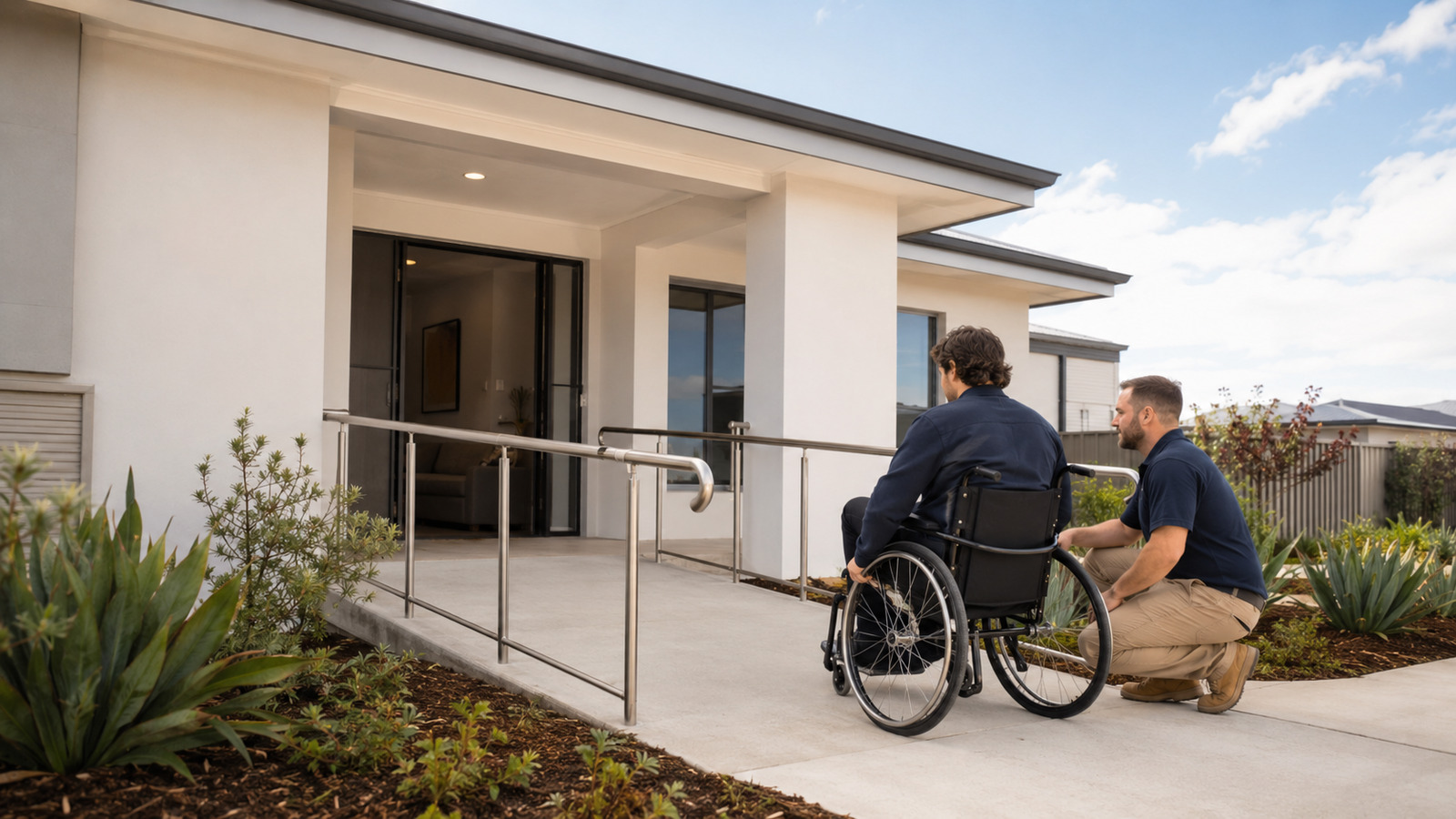
SDA construction costs are 30–70% higher than standard residential construction for the same land size and dwelling footprint. The premium is not in the land. It is in the physical design requirements that certification demands — and those requirements vary significantly across the four SDA categories.
SDA investment requires independent financial advice. KCL's role is the lending component.
What Drives the Construction Cost Premium
SDA dwellings must meet the SDA Design Standard administered by the NDIS Quality and Safeguards Commission. The standard specifies precise physical requirements for each category. These requirements drive cost in several ways:
Structural design requirements. Wider doorways and corridors, larger room dimensions, turning circles for wheelchair access, and reinforced construction for Robust dwellings all require design and structural changes that increase material and labour costs above standard builds.
Specialist systems and fittings. High Physical Support dwellings require ceiling hoist tracking throughout the dwelling, emergency call systems connected to an external monitoring service, automated door entry, specialist accessible bathrooms with ceiling hoist over the bath, and home automation for environmental control (lighting, heating, blinds). These systems have significant purchase and installation costs that do not exist in standard residential construction.
Compliance and certification. Every SDA dwelling must be certified by a registered SDA assessor. The certification process involves inspections during construction and at completion. Non-compliance requires rectification before certification can proceed, adding cost and delay. Using a builder who has not previously built to the SDA standard increases the risk of certification failure.
Limited supplier competition. The market for SDA-compliant ceiling hoists, emergency systems, and accessible bathroom fittings is smaller than the standard residential market. Specialist suppliers typically charge a premium.
Cost Ranges by Design Category
The following are indicative construction cost ranges for a two-bedroom SDA dwelling. These vary significantly by state, location, builder, and specification. Treat these as planning benchmarks only — obtain builder quotes for specific projects.
| Category | Cost Premium Over Standard Residential | Indicative Ballpark (2-bed) |
|---|---|---|
| Improved Liveability | 5–15% | Confirm with builder |
| Fully Accessible | 10–20% | Confirm with builder |
| Robust | 25–40% | Confirm with builder |
| High Physical Support | 40–70% | Confirm with builder |
Confirm construction costs with a builder who has certified SDA construction history before making any financial projections. Do not rely on developer cost estimates as the primary input.
Fees and rates vary by lender and are subject to change — confirm current pricing with your broker.
LVR limits vary by lender and are subject to individual assessment.
Talk to Key Choice Lending about your options.
Key Choice Lending has access to 72+ lenders and has supported Australian borrowers through more than $1 billion in transactions. Founder Matthew Clark is a two-time Amazon bestselling author and Better Business Awards winner. Book a Strategy Session — no obligation, focused on your situation.
The SDA Design Standard Certification Process
All SDA dwellings must be assessed and certified by a registered SDA assessor — an independent professional with expertise in the SDA Design Standard. Certification confirms the dwelling meets all requirements for the specified category.
The certification process typically involves:
- A design review before construction commences, confirming the plans meet the standard
- An interim inspection during construction
- A final inspection on completion
If the dwelling fails certification at any stage, modifications must be made before the process continues. A builder who has not previously built to SDA standard is more likely to require rectification, which adds cost and time to the process.
Certification is not optional. Without certification:
- The dwelling cannot register as SDA with the NDIS
- The dwelling cannot receive SDA payments
- The investor has a specialist-constructed property with no specialist income stream
Construction Finance Considerations for SDA
SDA investors building new dwellings typically use construction finance — a loan that advances in stages (progress payments) as construction milestones are reached. The loan converts to a standard investment loan on completion.
Key considerations for SDA construction finance:
- The lender needs to see the SDA design certification process planned from the outset — not added as an afterthought at completion
- Progress payment drawdown schedules must align with construction milestones, not just calendar dates
- Interest during construction capitalises onto the loan balance — this is an additional cost to model
- The conversion from construction loan to investment loan on completion typically requires a fresh property valuation confirming the completed property's value as an SDA asset
Construction loan timelines for SDA are typically 12–18 months for a standard dwelling, longer for complex High Physical Support builds. Delays in construction extend the interest capitalisation period and affect the investment's effective start date.
The Question That Identifies a Builder Worth Using
Ask any builder proposing to construct your SDA dwelling: how many SDA dwellings have you built, for which categories, and can you provide contact details for the SDA assessors who certified them?
A builder with a documented SDA construction history will answer this question clearly. A builder approaching SDA for the first time — perhaps because they see it as a growing market — will not be able to provide this history.
The cost of construction defects that prevent SDA certification is measured in months of vacancy, rectification expense, and deferred income. The cost of a few additional calls to verify builder history is zero.
Book a Strategy Session. Make the Move.
The information provided in this blog is for educational purposes only and should not be considered financial advice. Always consult with a professional financial advisor or lender for specific lending decisions.